
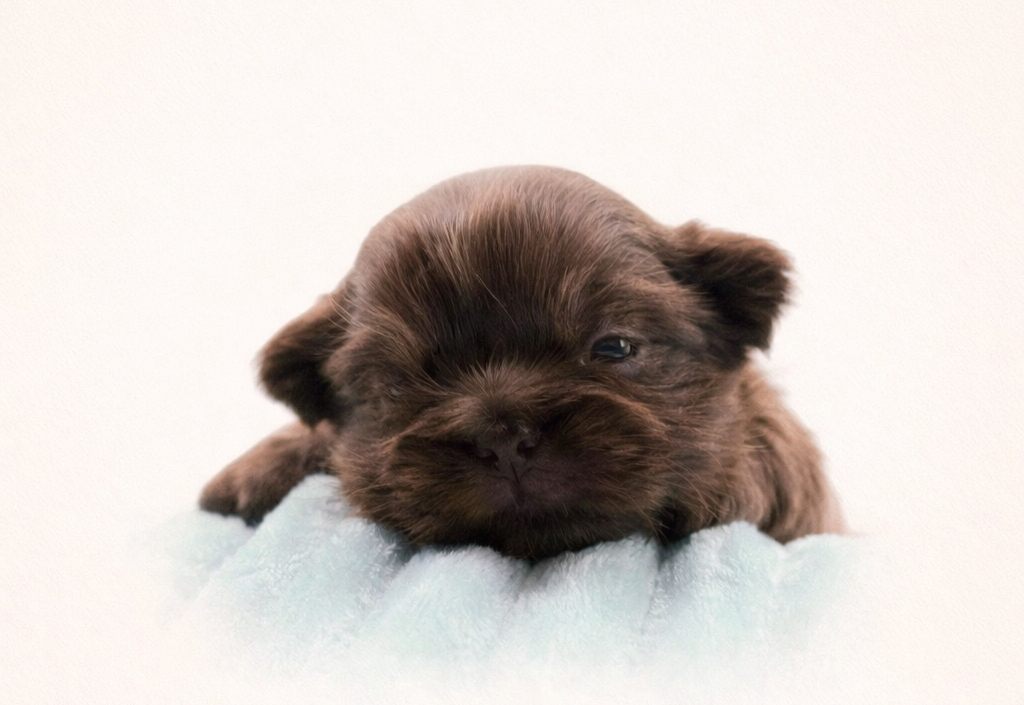
The full range of AKC Shih Tzu colors
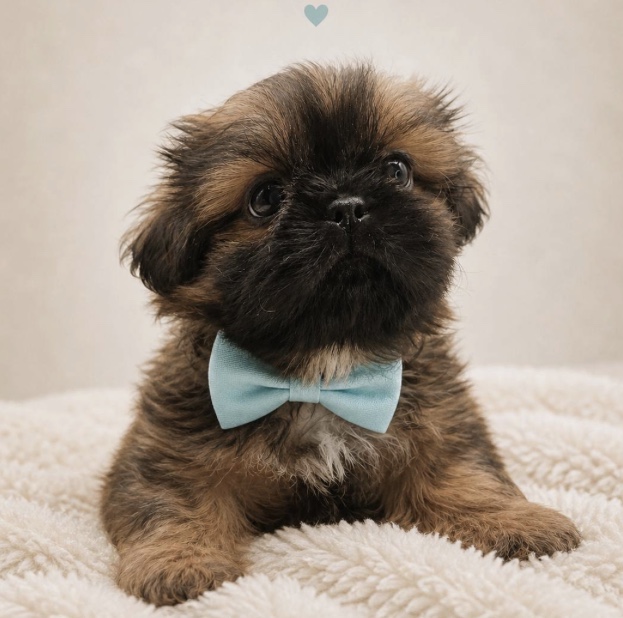
- Gold and white is the most recognized combination, ranging from pale champagne to deep, rich amber.
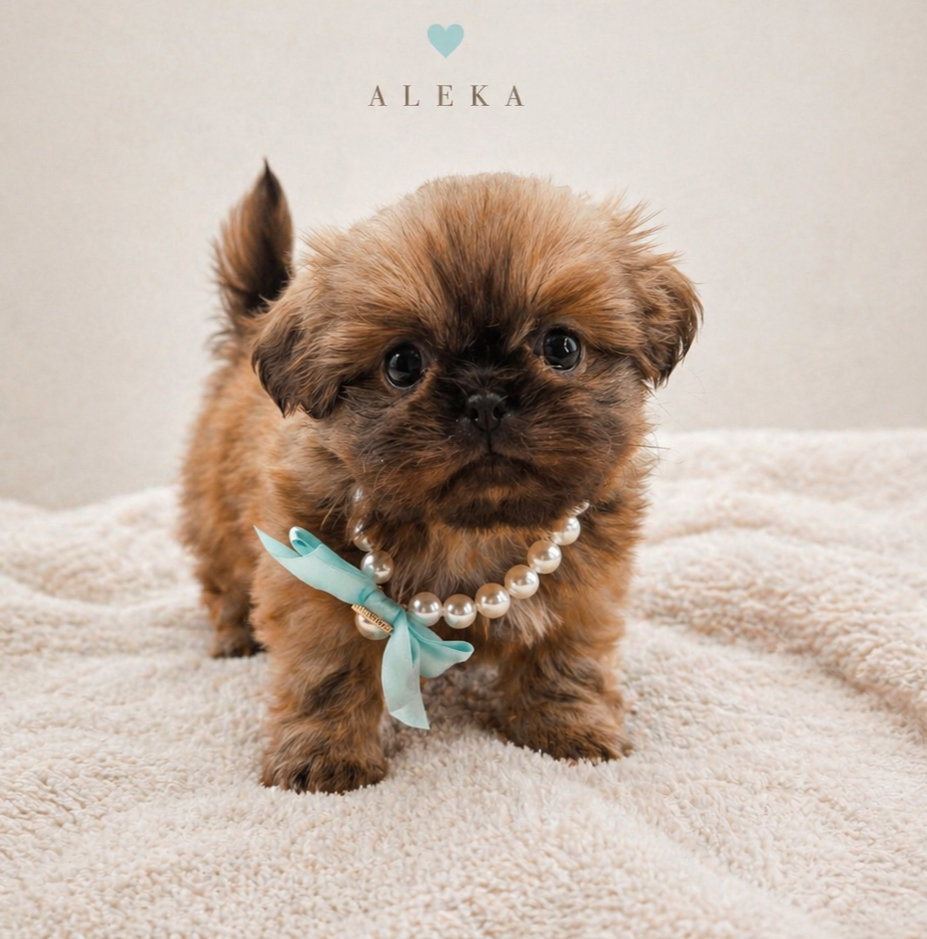
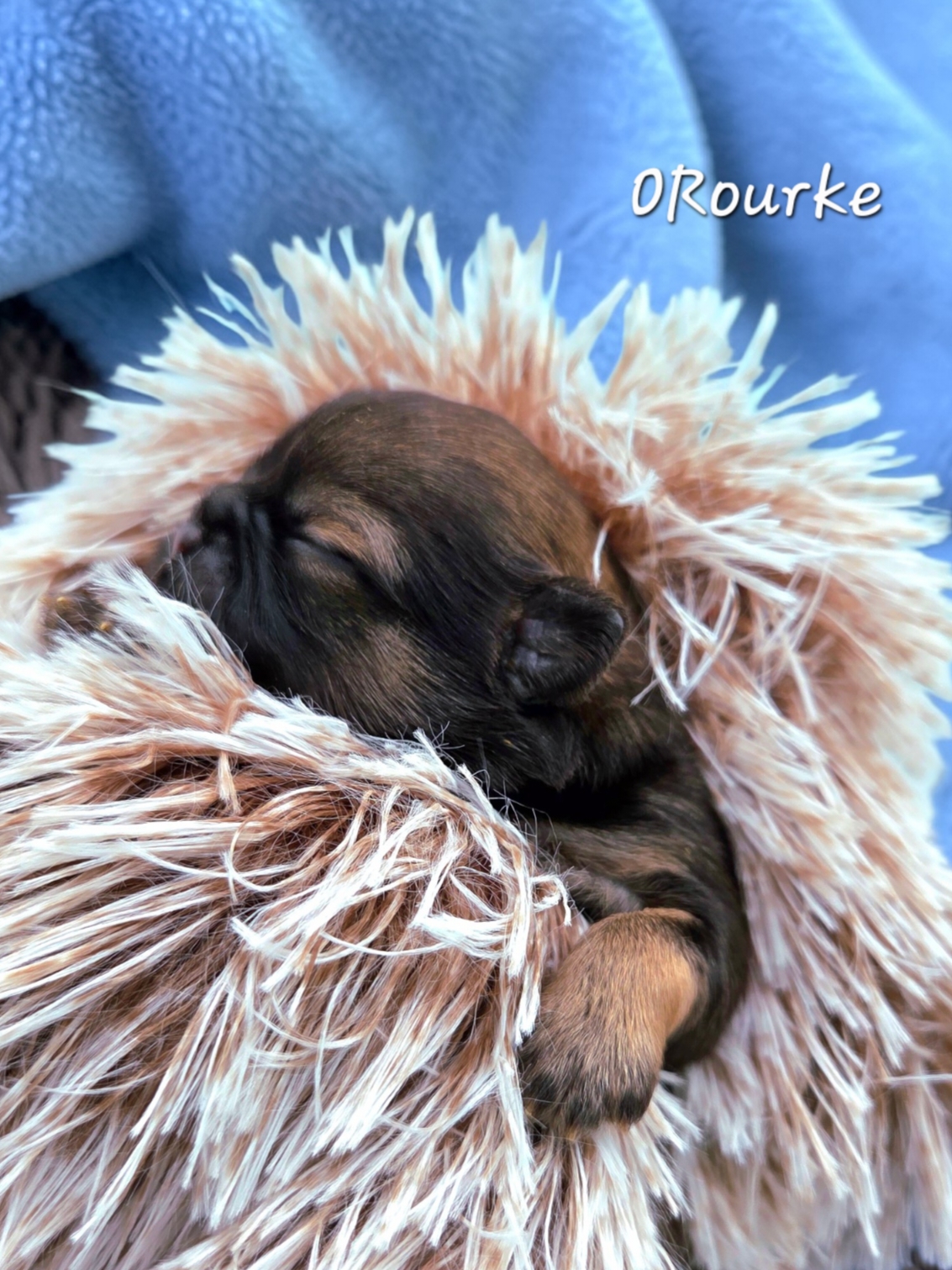
- Red Shih Tzus carry a warm copper tone at birth — one of the most eye-catching puppy colors in the breed.
- Black and white, solid black, and silver are striking and comparatively rare in most breeding programs.
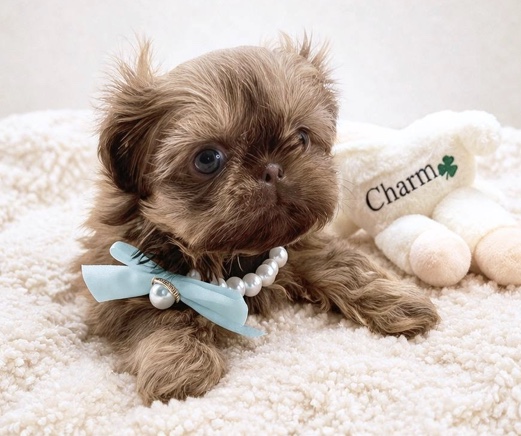
- Chocolate (liver) Shih Tzus have a warm brown coat, brown nose leather, and amber eyes.
- Parti-colored Shih Tzus display a white base with patches of any other AKC-recognized color — each pattern completely unique to that dog.
- Brindle, blue, and lavender also appear, though less commonly in show-bred lines.
Why your red puppy may become gold
This is the single most common surprise for new Shih Tzu owners, and it is entirely normal. The progressive graying gene — present in many Shih Tzu lines — causes pigment to dilute over time. A deep red puppy often lightens to gold, and a gold puppy may soften to cream by age two or three. Blacks can develop silver or gray throughout the coat as the dog matures. This is not a sign of poor breeding or health; it is a genetic characteristic of the breed. The best predictor of your puppy’s adult color is always the parents.
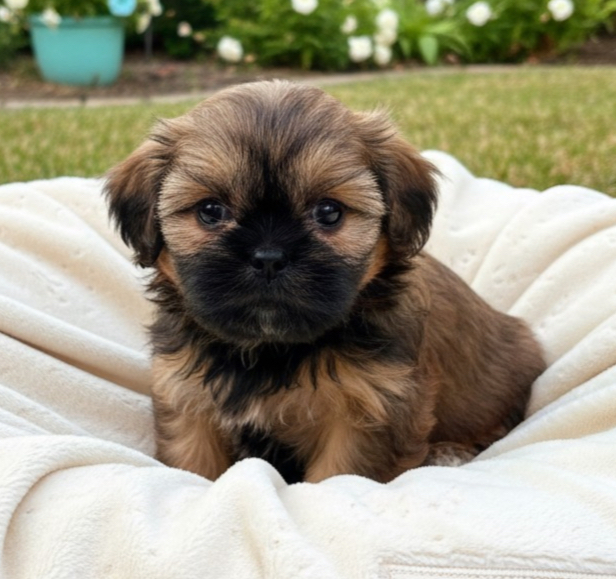
Parti-colored Shih Tzus
Parti Shih Tzus — white base with color patches — are fully AKC registered and have grown enormously in popularity over the past decade. No two parti dogs have the same pattern; the distribution and shape of the patches is completely individual. Parti puppies’ coloring is generally more stable than solid-color dogs — the white stays white, and the colored patches stay relatively true to their puppy tones.
What color will my puppy be as an adult?
- Reds: expect significant lightening toward gold or cream within the first one to two years.
- Golds: generally stable, though the muzzle often lightens with age.
- Blacks: may develop silver or gray tips across the body (the graying gene is common in the breed).
- White and parti: the most color-stable — puppies tend to stay close to what you see at eight weeks.
- Chocolates (liver): usually remain warm brown, though the tone may mellow slightly.
- Bottom line: if adult color matters to you, ask to see photos of the parents at two to three years of age. That is your most reliable preview.
Does color affect health or temperament?
No — and this is worth saying plainly. There is no credible genetic link between coat color and temperament or general health in the Shih Tzu breed. Color is a cosmetic trait. The exception worth knowing: extreme white dogs (predominantly white with little pigment around the eyes and nose) in some breeds carry a slightly elevated risk for congenital deafness. In Shih Tzus this is uncommon, but responsible breeders of heavily white-marked dogs may test hearing with a BAER test as a precaution. At Aleka Shih Tzu, we breed for health, structure, and temperament first — beautiful color is the bonus, not the goal.
See our available hand-raised AKC Shih Tzu puppies, or start your application.